
75.00. That’s the number the buy screen shows at a 1.00 bet, and it’s the only figure that really matters here. Multiply your stake by 75 and you’ve got the price of skipping straight into the Hold and Win round. So the question this page answers isn’t how the feature works (that’s covered elsewhere); it’s whether handing over 75x is smart money. Short version: it’s a fair price for a shortcut, and a lousy way to chase an edge. I bought a fistful of these on the demo to find out, and the maths lines up with the sinking feeling I got watching the balance move.
What 75x actually buys

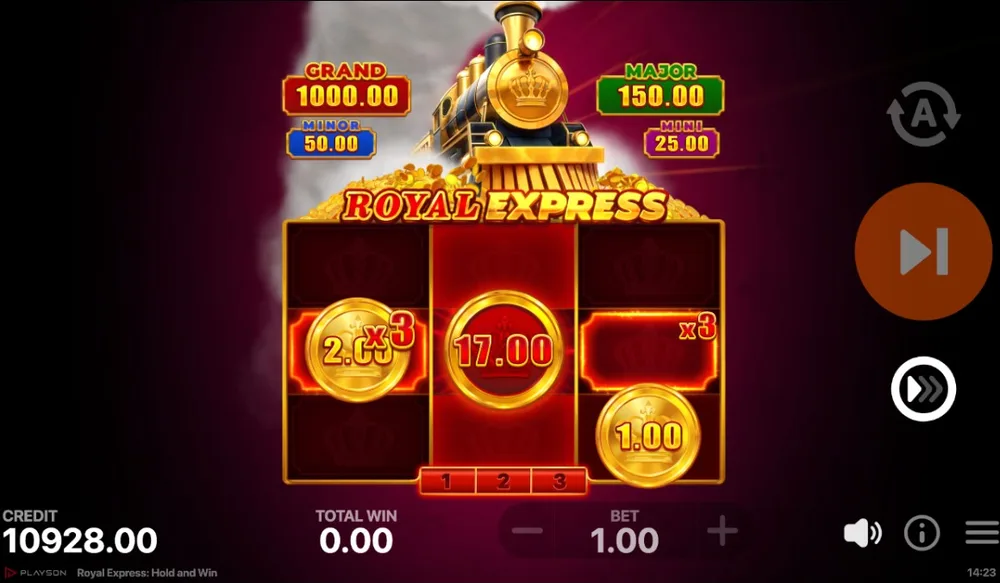
You’re paying for entry, not for a better round. Tap the button and you drop into the standard respins with nothing upgraded, no secret premium version, just the same feature you could’ve triggered the slow way. The step-by-step mechanics live on the Hold and Win bonus page, and if you want the base game rules, that’s the how to play guide.
So what you’re really buying is time.
The cost at real stakes
The price rides along with your bet, which keeps the multiple honest but also means the dollar figure climbs fast once you nudge the stake up. Here’s the outlay at three stakes most people actually play, so 75x stops being an abstraction and turns into a number you’d hand over.
| Your spin bet | Buy cost (about 75x) |
|---|---|
| $0.20 | ~$15 |
| $1.00 | ~$75 |
| $10.00 | ~$750 |
Fifteen bucks a pop at penny stakes feels almost casual. Push to a $10 base bet and every single tap is $750, which is where the buy quietly stops being a bit of fun and starts being a genuine bankroll event. For context, 75x is middling as buy prices go: pricier than the 60x bargains floating around, gentler than the 100x-plus features some studios charge. Fair, in other words.
Fair doesn’t mean cheap.
Does buying beat grinding?
No. And this is the bit the glossy button really doesn’t want you to sit with.
A buy doesn’t touch the house edge. The return on a purchased feature runs similar to base play, sometimes a hair worse, because the studio prices the button precisely so it keeps its cut whichever road you take. What the 75x actually changes is the shape of your risk, never the odds behind it. You’re crushing dozens of ordinary spins into one lump payment riding on a single outcome, and that cranks the variance hard. Over a long enough session, grinding and buying drift toward the same loss rate; buying just gets you there faster and in bigger, uglier lurches. The bankroll side of that is on the RTP and volatility page, with practical staking on the strategy guide.
My 75-in, 70-out round
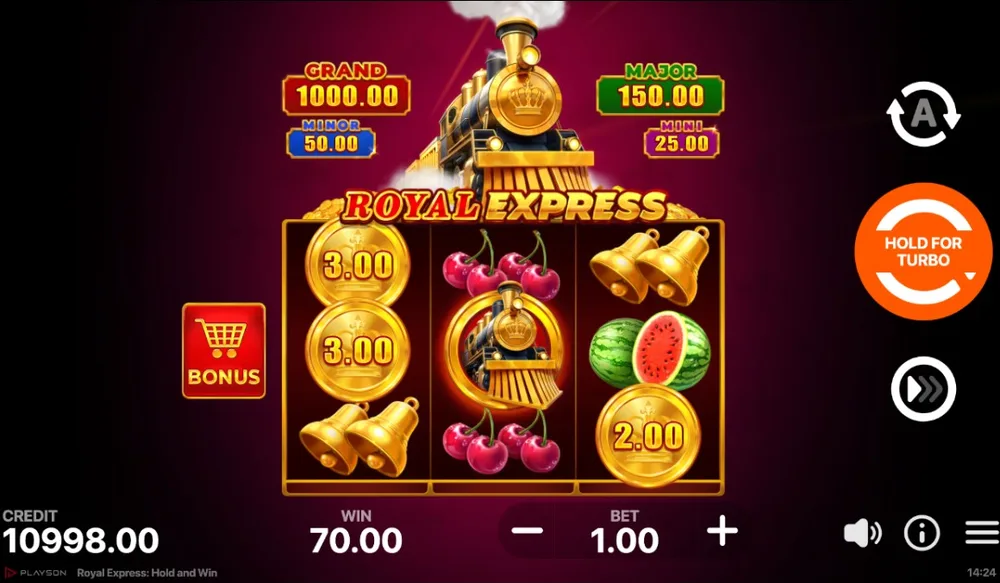
Let me give you the concrete one. I bought in at 75.00 on the demo, watched the coins land, and the round paid back 70.00. Down five. Not a disaster, not a story, and honestly that’s the whole point: the typical buy is a quiet small loss dressed up as an event. My demo balance started at 11,000, so I could afford to keep tapping and see the spread, and the spread was wide. A couple of buys came back under half their price. One roughly doubled. None sniffed the GRAND. That’s a tiny sample, so read it as flavour rather than forecast, but the flavour was exactly the theory made visible: a lot of scatter clustered around break-even-minus.
Worth it?
Depends what you came for.
If the base game’s waiting bores you, and it did bore me in stretches, the buy is a reasonable way to reach the only part most people showed up to see, as long as you file the 75x under entertainment spend and not investment. If instead you’re trying to stretch a bankroll or improve your odds, walk away from the button; at 75x a click you’ll torch funds faster than grinding ever would. My own rule is dead simple. I only buy at a stake where one 75x purchase is a small slice of the session budget, never a stake where it stings.
Where it falls short
Two things worth naming before you tap:
- It buys convenience, not an edge. The expected return doesn’t budge, and at higher stakes the cost gets brutal in a hurry.
- You’re buying into a feature that tops out at x1,000. Even a flawless purchase can’t unlock the kind of outsized payoff a pricier buy might justify on a bigger-ceiling slot.
Weigh both. For the full verdict, see the main Royal Express review, or jump to a casino that carries the game through our partner: see where to play.
The button might not be there
Buys aren’t legal everywhere. Several regulated markets restrict or ban them outright over problem-gambling concerns, with the United Kingdom the loudest example and parts of Europe following. So at a licensed casino in one of those regions the button is simply absent. That’s a call made by the regulator and the operator, not a fault in the game, and no amount of hunting through settings will conjure it back. If you can’t find a buy option, that’s your answer.
Buys are entertainment, never income. Strictly 18+, set a hard limit, and quit when it stops being fun.
Frequently Asked Questions
How much does the Royal Express bonus buy cost?
Exactly 75x your spin bet. That works out to about $15 on a $0.20 stake, $75 on a $1 stake, and $750 on a $10 stake. The price scales with whatever base bet you’ve set.
Does buying the bonus improve my chances?
No. A purchased feature returns about the same as base play, sometimes slightly worse. It changes the shape of your risk, not the odds, so you get faster and bigger swings around a similar result.
Why can’t I see a bonus buy button?
Some regulated markets, the UK among them, restrict or ban buy features. If your licensed casino sits in one of those regions, the option is removed. That’s a regulatory decision rather than a game fault.